
How do you create meaning through music?
Louis Germain
CEO & Founder @ Maison Germain // Entrepreneur - Composer/ Conductor
It’s a question every composer asks. And everyone answers in their own way.
Sometimes without words. It is within them. Something profound speaks to them beyond words.
Others, like me, want to understand it. Enjoy breaking it down to see what, specifically, creates meaning and emotion.
Creating meaning through music has always been at the core of my work, as I started out as a composer for film. And from film to branding, I think it’s essential to consider the importance of meaning through music made specifically for brands.
For many musicians, music comes before words. But this is also true for most listeners. If they feel an emotion, a connection, it’s because a link has been made between the image and their inner selves. By using idiosyncratic clichés, technical and stylistic processes, or a theme that sticks in the memory.
Most of the time, when I listen to a piece of music, I ask myself, “What does this mean?”
Perhaps sometimes music isn’t always meant to mean something. But it stimulates the imagination, allows you to escape, and in the space of a moment, realize that you’ve been transported somewhere else.
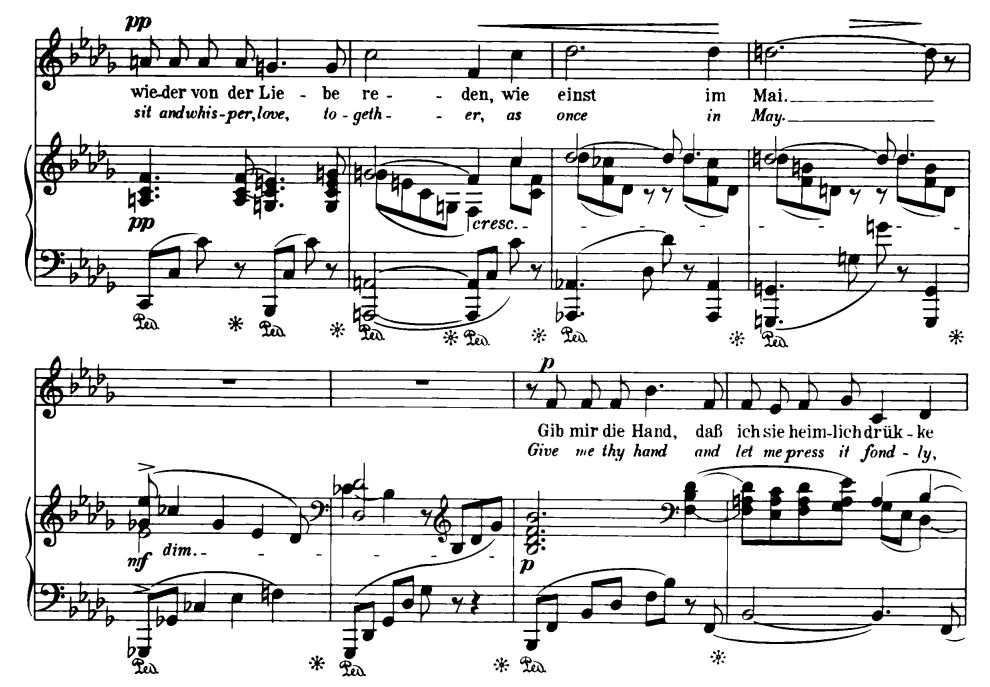
It was in this frame of mind that I listened to Strauss’s lieder. And one piece in particular struck me. “Allerselen.” And I suspect this piece particularly struck with me because it contains one of the most troll-like cadences I have heard recently. For those who don’t know what a cadence is, it’s like punctuation at the end of a sentence, but for a musical phrase.
“Allerselen.” All Souls’ Day.
The title alone sparks the mind. You can already picture it: graves, fading flowers, the transition from autumn to winter,
and a man remembering a love that once bloomed in May. Very romantic, very classic.
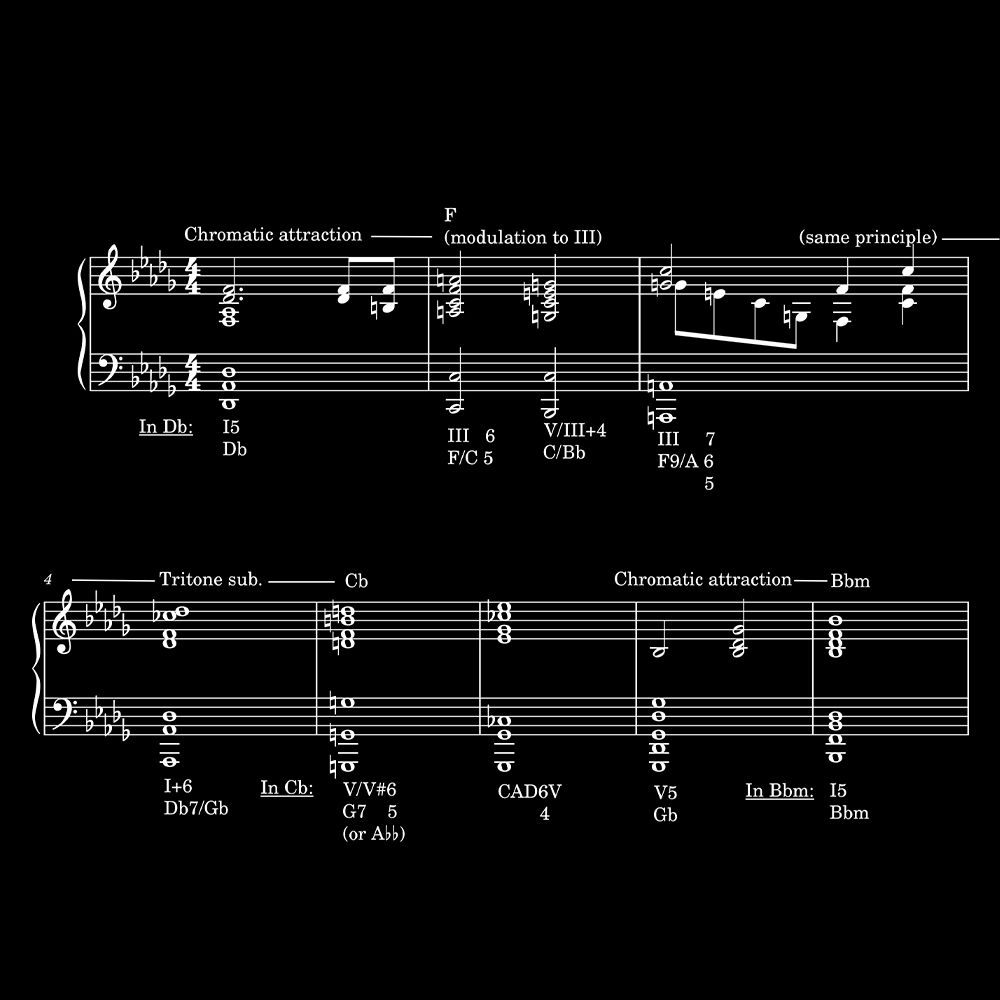
But where I find this piece powerful is in how it takes us on a journey through mental images and seasons, just by avoiding resolution. That is, through the power of musical language, it evokes the languid feeling of a man lost in his memories. It’s absolutely brilliant.
The resolution is delayed each time, and just as the cadence approaches, it is avoided again. These harmonic delays don’t just sound nice, they mirror the emotional experience of remembering someone. Of longing, of nostalgia and suspension.
For the musicians among you, I have attached a short analysis I made of this passage so you can see what is happening.
This is the core of my approach. Writing music that means something.
Not just a fast-food phrase that doesn’t last.
But a powerful idea that stays with you.
0 commentaires